In Milton, an Acre Is Really a Coverage Budget. The November 16 Vote Changes What Fits on It.
November 12, 2026
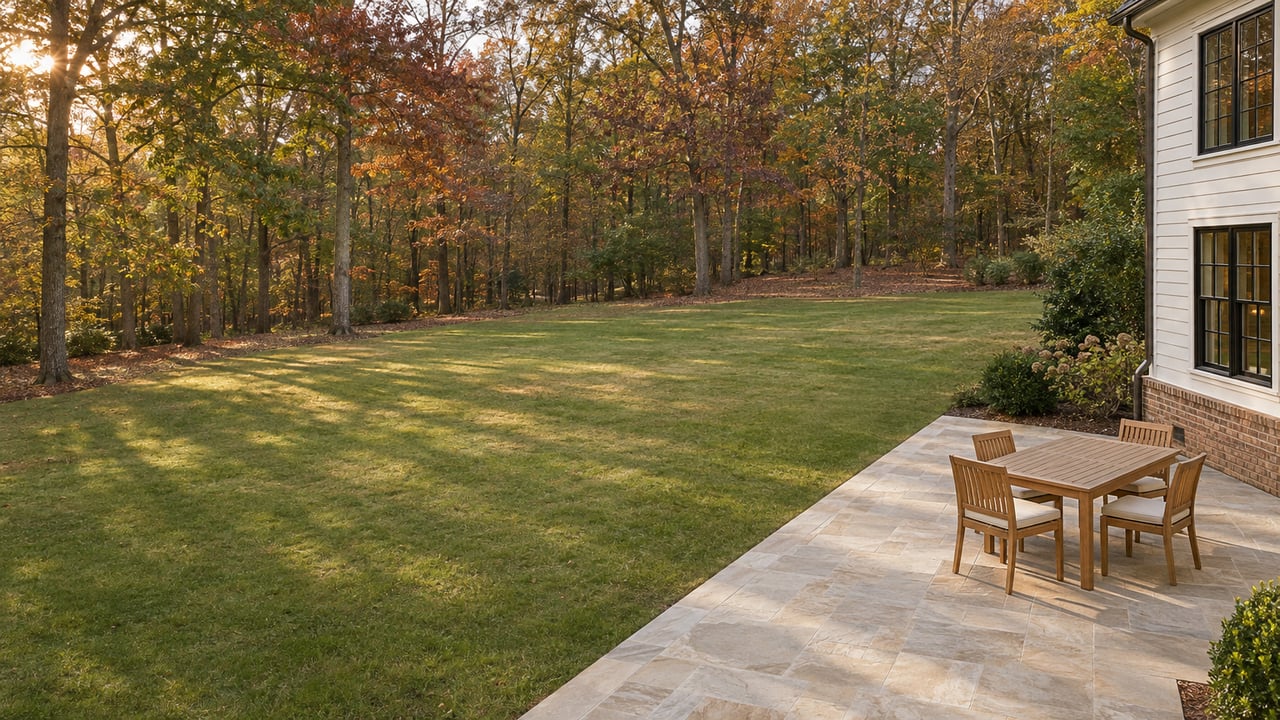
When you look at a newer home on an acre in Milton, the acreage tells you less than you'd think. The more useful number is how much of the lot is already covered by the house, garage, driveway and porches, and how much of the city's coverage allowance is left. Milton has spent most of 2026 rewriting its AG-1 rules around that number. City Council's zoning vote on the second round is set for Monday, November 16.
Almost all residential land in Milton is zoned AG-1, the city's agricultural residential district. Appen Media's Milton Herald reported that the zoning sets lot sizes and setbacks meant to keep the city's rural look. The city's development code sets the minimum AG-1 parcel at one acre on paved roads and three acres on unpaved roads, according to Milton's Unified Development Code.
Those minimums never changed. What changed is what gets built on them. In the same Milton Herald article, the city's Community Development Department reported that from 2021 to 2025 the average Milton home grew to more than 5,200 square feet while the average lot shrank to 1.86 acres. Each lot also comes with a cap on impervious coverage, and the Herald described what happens when a builder uses all of it. City Manager Steven Krokoff said new homeowners are often frustrated to find they can't add a pool or a deck.
That is the friction that matters most to a buyer. You can own an acre in Milton and still have very little room left to build on it.
Under the Phase 1 rules Council adopted on April 13, 2026, a parcel that touches a public street right-of-way can have no more than 20% lot coverage. Parcels of three acres or more are allowed 25%. The city's April 14 summary of the vote lists both caps.
The city's preview of the November 2 Council agenda listed a minor plat at 2395 Bethany Bend that would divide 2.012 acres into two 1.006-acre lots.
The budget is smaller than it sounds because of everything that counts against it. While the code changes were being drafted, the Milton Herald reported that lot coverage would be defined to include:
The adopted definition of impervious cover is broad. It covers any man-made paved, hardened or structural surface that significantly blocks water from soaking in, and some gravel can count depending on how it's used, according to the Herald's report on the April vote. On a deep lot with a long driveway, the driveway alone can take a real share of the budget before anyone plans a terrace.
Before 2026, buyers mostly found out about this problem after they moved in. The Herald reported that minor plats, which divide land into a few lots, did not require detailed development review before the land was divided. That meant problems often surfaced at the building permit stage. Deputy Community Development Director Tracie Wildes told the Milton Herald that skipping stormwater and footprint decisions before a lot is sold "pushes the burden to homeowners or land buyers who are not experts."
Council paused new minor-plat applications in January. On February 9 it voted 6-1 to extend the moratorium. When it lifted the moratorium on April 13, it added two survey requirements that turn the coverage budget into a document. The city's April 14 recap describes them:
The Herald reported that the city's stated purpose for the as-built survey is to give lot buyers and homeowners information about a property's coverage.
Mayor Peyton Jamison described the April package in the city's recap: "This is one of those processes where we're not going to have 100% winners or 100% losers. But I think that, at the end of the day, we're going to have a better city."
The second phase is a text amendment numbered RZ26-05. It had its first presentation on November 2. Milton's Council agenda notes that a first presentation allows questions and general direction but not a binding vote. The Planning Commission unanimously recommended approval on October 14. The zoning vote is on the November 16 agenda. The four proposals in the staff agenda report each affect the coverage budget differently.
A way to raise the cap, in exchange for land. A lot subject to the 20% cap could get a five-point credit, up to 25%, by recording a conservation easement on at least 10% of the lot. The easement has to sit inside the buildable area. It must stay outside setbacks, floodplains, wetlands, stream buffers, septic and reserve septic areas, and existing easements. Gardens, natural vegetation and crops are allowed in it, but impervious surfaces generally are not. The easement must be recorded before any permit that relies on the credit, and the credit is limited to lots at or under 20% coverage when the owner applies. The proposed easement is permanent.
Pools move farther from the property line. On lots of one acre or larger in the Rural Milton Overlay, pools, pool equipment and their decks would need to be at least 20 feet from all property lines, up from 10 feet.
A 20-foot natural area during construction. New lots that border existing properties outside the subdivision or minor plat would carry a 20-foot temporary construction setback along those lines. New minor-plat lots on a public street would get the same setback along the frontage. Grading, structures, stormwater facilities and septic systems would generally be kept out of it. The restriction ends when the main house gets its Certificate of Occupancy.
A buildable-area rule that stops penalizing big lots. Today the required buildable area is tied to permitted lot coverage, so it grows as the lot gets bigger. The staff report proposes replacing that calculation with a 10,890-square-foot minimum, which is a quarter acre. The city's description of the Planning Commission hearing says this change is aimed at lots of three acres or more and does not affect smaller lots. The Commission's recommendation was that the building area on AG-1 lots of three acres or more be greater than 10,890 square feet, the Milton Journal reported. The 30,000-square-foot usable-area minimum stays, as does the requirement that at least half of a lot sit outside the floodplain.
Council's listed options include adopting the package, adopting only parts of it or modifying it, or keeping the current rules. The Agricultural Tract Exception for large tracts is being handled separately as RZ26-06. The Milton Journal reported that it was deferred from the Planning Commission's October 28 meeting.
Milton's next wave of new homes will be priced, permitted and sold under these rules. The Milton Journal reported on Brookecrest, Pods C and D, a Toll Southeast LP Company Inc. plan to divide 53.31 acres off King and Cox roads into 42 lots of at least one acre on the Roswell city line. The land is zoned AG-1 and lies in the Rural Milton Overlay. The plan needs no rezoning, and city staff found that the preliminary plat meets applicable codes.
The city's interest goes beyond new subdivisions. Milton recently put about 185 acres of Birmingham Park under a permanent conservation easement. In October it also held a public input session, with the Milton Equestrian Committee listening, for people who own or hope to own large lots and horse farms, the Milton Journal reported.
Milton posts Council agendas and minutes on its agendas and minutes page.
This post is general information, not legal advice. Zoning, easements and setbacks depend on the specific parcel, so confirm yours with the City of Milton or a qualified land-use professional before you rely on it.
If you're looking at a Milton home and already picturing a pool or a barn, Mike Donovan can help you find a home. Let's Connect.





Mike Donovan leverages the discipline and integrity of a Marine veteran to deliver a premium real estate experience. With meticulous attention to detail and a commitment to client satisfaction, he transforms buying or selling a home into a seamless and rewarding journey. For Mike, excellence is standard, and every client deserves a path marked by clarity, trust, and confidence.
Mike Donovan
3760 Sixes Rd Ste 108 Canton, GA 30114